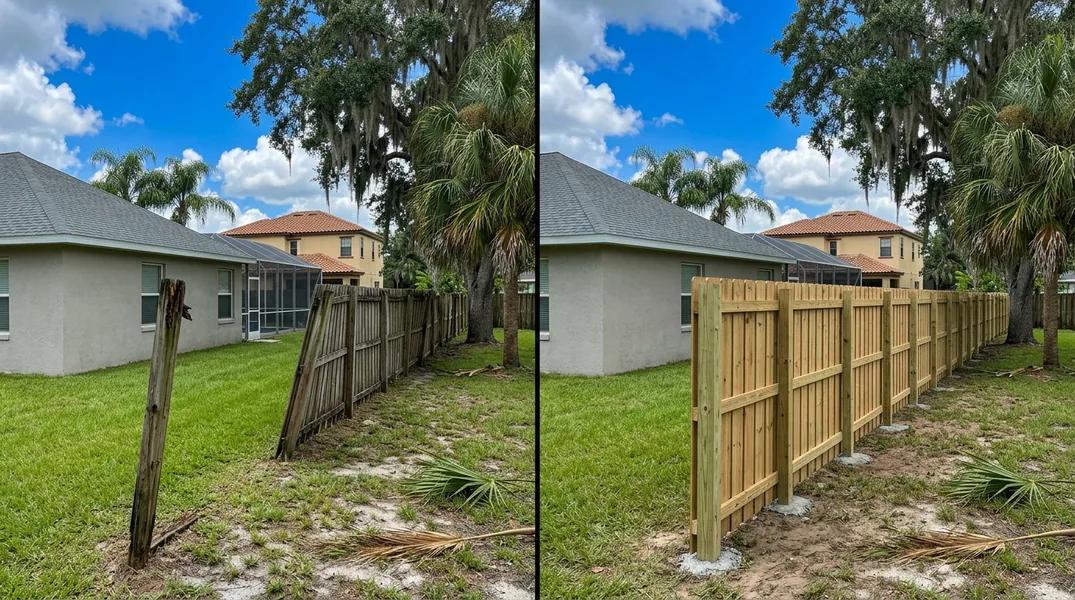
Why Do Orlando Fences Lean? Understanding the Root Causes
If you've noticed your fence leaning to one side, you're not alone. Many homeowners in Orlando experience this frustrating problem, and it typically points to one or more underlying issues with the fence posts themselves. A leaning fence isn't just an eyesore; it's a structural warning sign that demands attention before the entire fence fails.
The primary culprit behind leaning fences in central Florida is the region's unique soil composition. Orlando sits on sandy, loose soil that lacks the density and stability of clay or loam found in other parts of the country. When fence posts are set in sandy soil, they don't grip as firmly as they would elsewhere. Over time, water drainage, ground settling, and lateral pressure from wind can cause the posts to shift and tilt. This is especially true if the posts weren't set deep enough or if concrete wasn't properly mixed and compacted during installation.
Termite Damage: The Hidden Threat to Your Fence Posts
Beyond soil issues, termites represent a serious and often invisible threat to wooden fence structures. Florida's warm, humid climate is a termite paradise, and Orlando homeowners must remain vigilant. Subterranean termites, the most common species in the region, tunnel through wood from the inside out, weakening posts from within long before external signs become obvious. By the time you notice a fence leaning or sagging, the termite damaged fence post may have already lost significant structural integrity.
The challenge with termite damage is that it progresses silently. A post that looks solid on the outside might be hollowed out internally, losing up to 80 percent of its load-bearing capacity. This is why a leaning fence in Florida often signals an advanced termite infestation. When you see the fence moving, the damage is typically well established. The good news is that professional inspection can identify termite activity early, and timely fence post replacement can restore your fence's stability and protect your property investment.
How Water Drainage and Ground Movement Accelerate Post Failure
Florida's heavy rainfall and high water table create additional stress on fence posts. When water pools around the base of a post or remains in the soil for extended periods, it softens the ground and promotes wood rot, especially in untreated or poorly treated timber. The freeze-thaw cycle, while less severe in central Florida than in northern states, still occurs during winter months and can push posts upward and sideways as the ground expands and contracts.
Sandy soil also drains too quickly in some conditions and too slowly in others, depending on rainfall intensity and local topography. This inconsistency means posts experience unpredictable settling and shifting. A post that was perfectly plumb (vertical) at installation may gradually tilt as the soil beneath it compacts unevenly. If the original installation lacked proper drainage around the post base or if the concrete footer was porous, water intrusion accelerates both wood decay and soil erosion, compounding the lean over months or years.
Signs Your Fence Posts Need Repair or Replacement
Recognizing the warning signs of failing fence posts helps you address problems before catastrophic failure occurs. The most obvious indicator is visible leaning or bowing along the fence line. You might also notice gaps opening up between fence boards, making the fence less private and less attractive. Posts that feel soft or spongy when you press on them, or posts with visible rot, discoloration, or insect damage, are candidates for immediate attention.
Listen for sounds too. If you hear creaking or popping noises when the wind blows, the posts are likely moving and straining under load. Check the base of posts where they meet the ground; if you see soil erosion, termite mud tubes, or standing water, these are red flags. You should also inspect the concrete footer. Cracked, crumbling, or heaving concrete indicates that the post foundation is failing. Any combination of these signs means it's time to call a professional for a thorough inspection and to discuss leaning fence repair or post replacement options.
Professional Fence Post Repair and Replacement Solutions
When it comes to fixing a leaning fence, homeowners have several options depending on the severity of the damage. For minor lean caused by soil settling alone, a professional contractor may be able to reset the post by carefully excavating around it, adjusting its angle, and re-pouring the concrete footer with improved drainage. However, this approach only works if the post itself is still structurally sound and if the lean is relatively new.
For posts with termite damage, rot, or severe lean, fence post replacement is the most reliable and lasting solution. This involves removing the damaged post, excavating the old concrete, and installing a new post set deeper and more securely in fresh concrete with proper grading and drainage. Modern installations often use pressure-treated lumber or, for maximum durability in Florida's harsh environment, composite materials that resist both termite damage and rot. If you have a Wood & Privacy Fence Installation made from quality materials, professional replacement ensures your fence will remain stable for decades.
Orlando Fence Company specializes in diagnosing post problems and executing repairs that address the root cause, not just the symptom. Our team understands the specific challenges that Orlando soil and climate create for fence structures. We use industry-best practices for post setting, including proper depth, concrete strength, and drainage considerations tailored to your property's unique conditions.
Preventing Future Fence Lean: Maintenance and Installation Best Practices
Prevention is always more cost-effective than repair. If you're planning new Wood & Privacy Fence Installation or replacing an old fence, invest in proper installation from the start. Posts should be set at least 30 to 36 inches deep in central Florida, with concrete footers that extend below the frost line and are properly sloped for water drainage away from the post base. Using pressure-treated lumber rated for ground contact and considering termite-resistant wood species can add years to your fence's lifespan.
Once your fence is installed, regular maintenance extends its life significantly. Inspect posts annually, especially after heavy storms or during the rainy season. Keep vegetation trimmed away from the fence base to improve air circulation and reduce moisture buildup. If you live in an area with known termite activity, consider having a pest control professional apply a preventive treatment around the fence perimeter. Address any signs of rot, insect damage, or leaning immediately rather than waiting for the problem to worsen. These simple steps can prevent the costly repairs that many Orlando homeowners face after years of neglect.
Getting Your Leaning Fence Fixed: Next Steps
If your fence is leaning or showing signs of post failure, the first step is to have a professional assess the damage. Orlando Fence Company offers free inspections and free estimate consultations to help you understand your options and budget accordingly. We'll identify whether your posts need repair, replacement, or if other structural issues are at play. Our team can discuss whether your existing fence can be salvaged or if a complete fence replacement makes more sense for your property.
Don't delay on fence repairs. A leaning fence compromises your property's security, privacy, and curb appeal. It also poses a safety risk, especially during high winds or storms when a structurally weakened fence can fail completely. Contact Orlando Fence Company today at (689) 400-2205 to schedule your inspection and get a clear path forward. We're committed to delivering quality workmanship and lasting solutions that protect your home for years to come.
Looking for a professional fence contractor in Orlando? Orlando Fence Company responds fast for all your fence needs.
Get a Free Quote